15 Things to Paint on Paper: Easy Ideas to Start Today
A blank sheet of paper stops many painters before they begin. The problem is rarely skill. It is choice.
This guide removes that problem. It gives you 15 proven subjects to paint on paper. Each one includes a short description, the best paint to use, and a technique to try.
Why Paper Works So Well
Paper is affordable. It is portable. It invites experiments.
A pad of paper costs less than one canvas. That lowers the pressure and encourages you to play. You practice more, and you improve faster.
Choose the right paper for your paint:
- Watercolor paper (140 lb / 300 gsm): Handles wet washes without buckling.
- Mixed media paper: Suits acrylic and gouache.
- Cold press: Adds texture. It suits landscapes and florals.
- Hot press: Stays smooth. It suits fine detail.
1. Sunsets

A sunset is the ideal first subject. It teaches blending in one simple exercise.
Wet the paper. Brush in yellow at the horizon, then orange, pink, and purple above it. Let the colors melt together. Add a dark strip of land at the bottom.
Best paint: Watercolor.
2. Clouds

Clouds train you to paint loose and soft. They have no hard rules and no wrong shapes.
Paint a pale blue wash across the sky. Lift out cloud shapes with a damp tissue. Shade the undersides with soft gray.
Best paint: Watercolor or acrylic.
3. Moon and Stars

This subject delivers high drama with low effort. Contrast does the work for you.
Paint a deep blue or black sky. Add a pale circle for the moon. Flick white paint from a stiff brush for stars.
Best paint: Gouache or acrylic.
4. Ocean Waves

Waves teach layering. Each layer adds depth.
Start with a light turquoise base. Add darker blue in the lower half. Dab white along the crests with a nearly dry brush to create foam.
Best paint: Acrylic or watercolor.
5. Mountain Ranges

Mountains show you how distance works. Lighter tones recede. Darker tones advance.
Paint the farthest peaks in pale blue-gray. Add each closer range in a slightly darker shade. Let each layer dry before the next.
Best paint: Watercolor.
6. Misty Forests

A misty forest looks complex but uses a simple method. Soft background, sharp foreground.
Paint a wet, pale green-gray wash. While it dries, add thin tree trunks in the distance. Paint bold, dark trees in front.
Best paint: Watercolor.
7. Simple Flowers

Flowers are a natural fit for paper. Their soft edges suit wet paint.
Start with tulips, daisies, or poppies. Use one stroke per petal. Add a thin green stem and a leaf or two.
Best paint: Watercolor or gouache.
8. Leaves and Botanical Sprigs

Leaves build brush control. Each one is a single press-and-lift stroke.
Paint a curved stem. Add leaves in pairs along its length. Vary the greens for a natural look.
Best paint: Watercolor.
9. Fruit

Fruit teaches form and shading. Round shapes show how light behaves.
Paint a lemon, apple, or pear in its base color. Add a darker tone on the shadow side. Leave a small white highlight.
Best paint: Gouache or watercolor.
10. Birds

Birds add life to any painting. A rough shape is enough.
Paint a simple oval body and a smaller head. Add a beak, tail, and thin legs. Use bright color for robins, jays, or hummingbirds.
Best paint: Watercolor or gouache.
11. Butterflies

A butterfly gives you a symmetrical design to play with. Color choices matter more than accuracy.
Paint one wing. Mirror the shape on the other side. Add thin dark lines for veins and edges.
Best paint: Watercolor.
12. Galaxy Scenes

A galaxy is a forgiving subject. Blending hides small mistakes.
Layer deep blue, purple, and magenta while wet. Add a bright glow near the center. Finish with white splatters for stars.
Best paint: Acrylic or watercolor with white gouache.
13. Geometric Patterns

Geometric art trains precision. It also looks striking on a wall.
Press painter’s tape across the paper in a pattern. Paint inside each shape in a limited palette. Peel the tape when dry for crisp edges.
Best paint: Acrylic or gouache.
14. Mandalas

A mandala builds focus. The repeating pattern calms the mind.
Mark a center point. Work outward in rings. Repeat petals, dots, and lines in each ring.
Best paint: Gouache or acrylic with a fine brush.
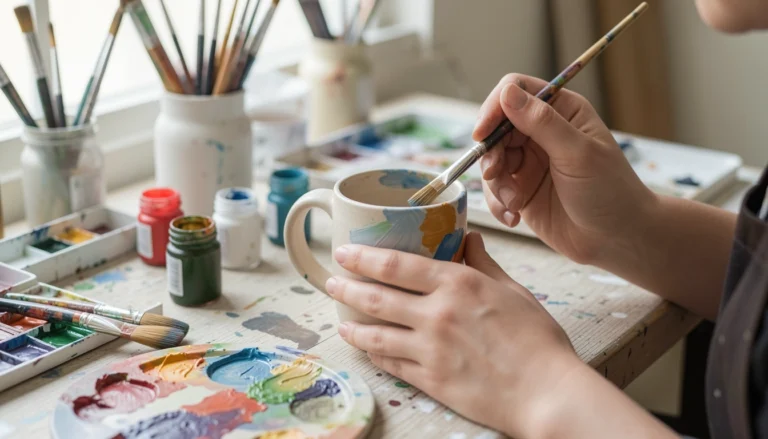
15. Coffee Cups and Cozy Still Life

Everyday objects make excellent subjects. You can paint them from life.
Set a mug on a table. Paint its shape in a warm tone. Add a curved shadow underneath and a soft wisp of steam.
Best paint: Watercolor or gouache.
Tips for Painting on Paper
Follow these habits for cleaner results:
- Tape the edges. A taped sheet dries flat.
- Paint light to dark. Watercolor cannot hide dark mistakes.
- Use a small palette. Three to five colors keep a painting cohesive.
- Test colors on scrap paper. Check before committing.
- Let layers dry. Patience prevents muddy color.
- Paint small. A 5×7 inch sheet makes daily practice easy.
Frequently Asked Questions
What is the easiest thing to paint on paper?
Sunsets, clouds, and leaves are the easiest. They rely on blending and basic shapes, not fine detail.
What paint works best on paper?
Watercolor and gouache are the classic choices. Acrylic works too, on heavier paper.
Can I paint on regular printer paper?
Printer paper buckles when wet. Use it only for dry techniques. Choose watercolor or mixed media paper for best results.
How do I stop paper from warping?
Tape the edges to a board. Use paper of 140 lb or heavier. Avoid over-soaking the surface.
What do I paint when I have no inspiration?
Pick a subject from this list. Set a 20-minute timer. Paint without judging the result.
Final Thoughts
You need very little to start. One sheet of paper, a few colors, and one idea are enough.
Choose a subject from this list today. Keep it simple. Paint it, then paint the next one. Skill grows one page at a time.