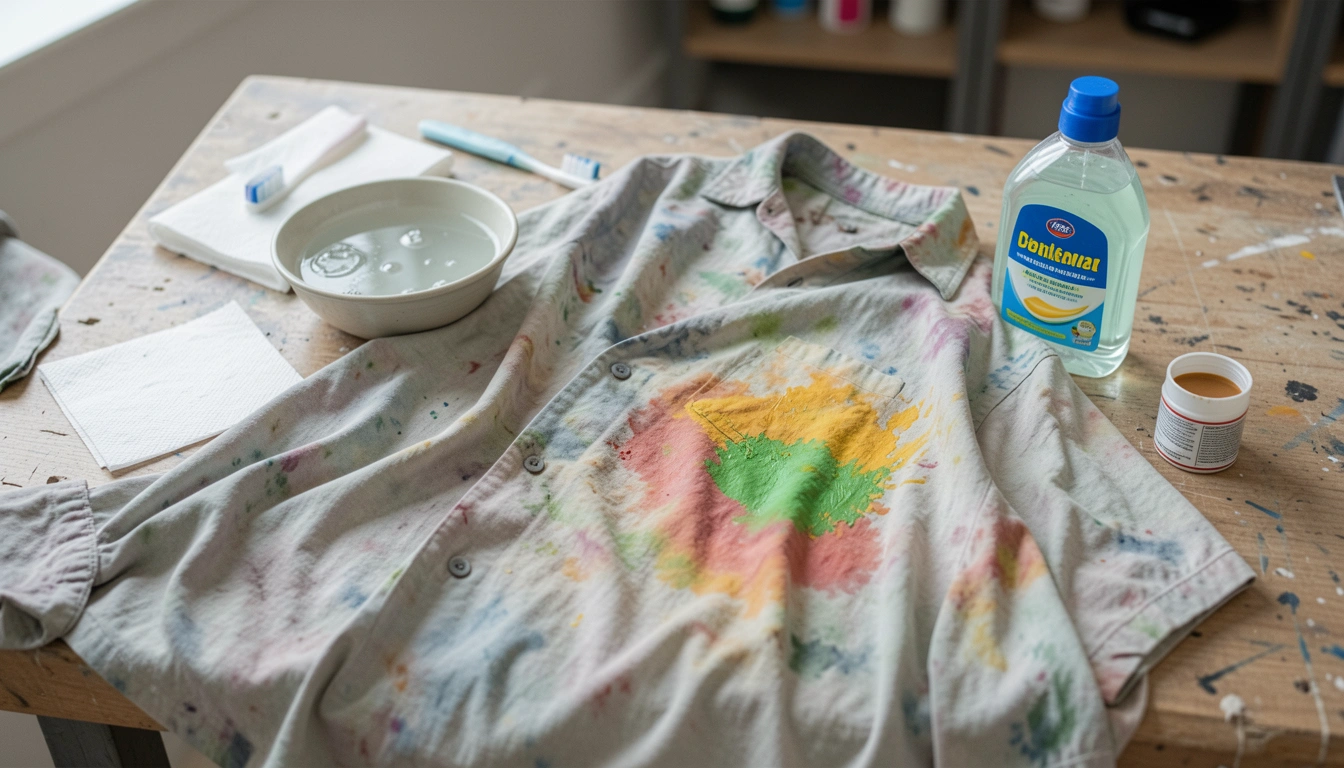
How to Remove Paint From Clothes Without Damaging Fabric
I ruined a favorite shirt the first time I splattered paint on it. I tried every home trick and learned most of them made things worse.
After a few ruined sleeves and lots of patience, I figured out a reliable order that actually works.
This is the full walkthrough I follow, step by step, so you can get paint out without making the fabric worse.
How to Remove Paint From Clothes Without Damaging Fabric
By the end you'll know how to identify the paint, pick the right treatment, and avoid setting a stain. It's doable with basic supplies and a little patience. Here's how I do it, broken into 7 simple steps.
What You'll Need
- Clean workspace and good lighting
- Paper towels or clean rags
- Dull knife or spoon for scraping
- Cold running water (tap)
- Liquid dish soap or hand soap
- Soft-bristled brush (old toothbrush)
- Small bowl or bucket for soaking
- Rubbing alcohol and/or acetone/mineral spirits (for oil-based paint)
- Rubber gloves and a well-ventilated area (for solvents)
- Laundry detergent and access to a washing machine or sink
- Oxygen-based bleach (optional, color-safe)
- A hidden fabric scrap or seam to test treatments
Step 1: Identify the Paint Type Before You Touch It
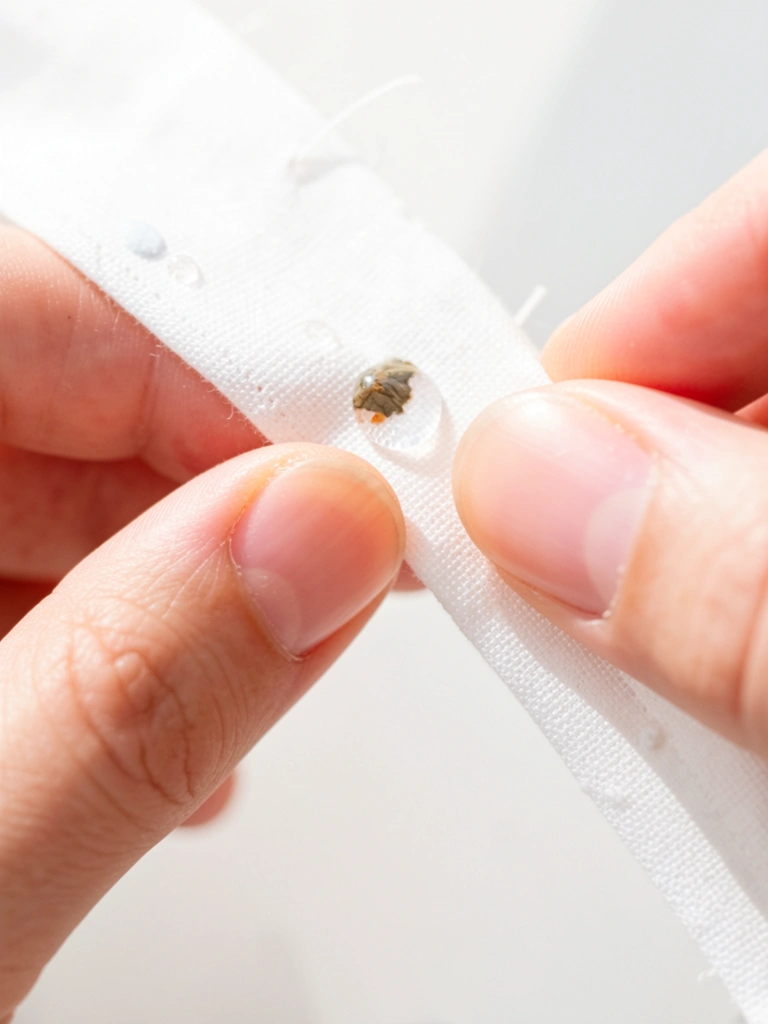
First, figure out if the paint is water-based (acrylic, latex) or oil-based (alkyd, enamel). Check the can or ask the person who painted if possible.
If you can't check, put a drop of water on the spot. If it softens and lifts, it's probably water-based. If it beads or doesn't budge, it's likely oil-based.
Mine looked like it was set solid once, but the water test saved it. The biggest risk here is using a solvent on water-based paint and spreading it. Tip: when unsure, test in a hidden seam before treating the visible stain.
Step 2: Remove Excess Paint Carefully
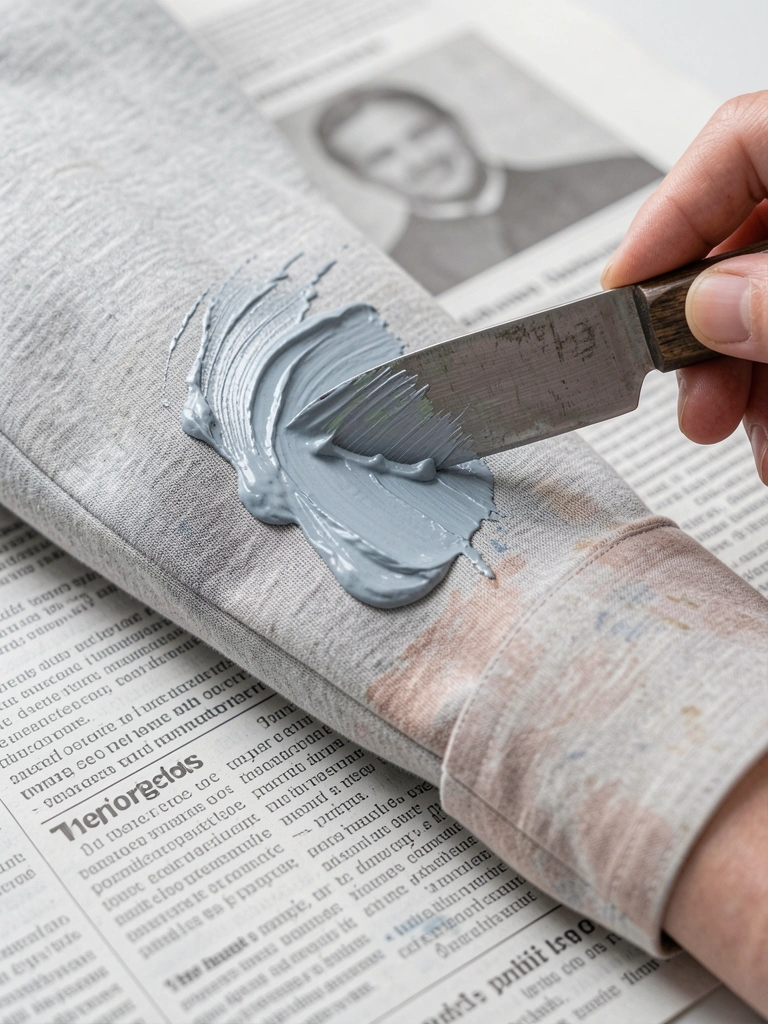
If the paint is still wet, gently blot with paper towels to lift as much as possible. For dried globs, use a dull knife or spoon to lift flakes away. Work from the outside of the stain toward the center.
When I'm careful, I remove most of the bulk without pushing paint deeper into the weave. The common mistake is rubbing—this spreads the stain and embeds pigment. If a smear starts spreading, stop and scrape instead. Practical tip: keep a stack of clean paper towels nearby and change them as they pick up paint to avoid re-depositing it.
Step 3: Flush from the Back with Cold Water (Water-Based Only)
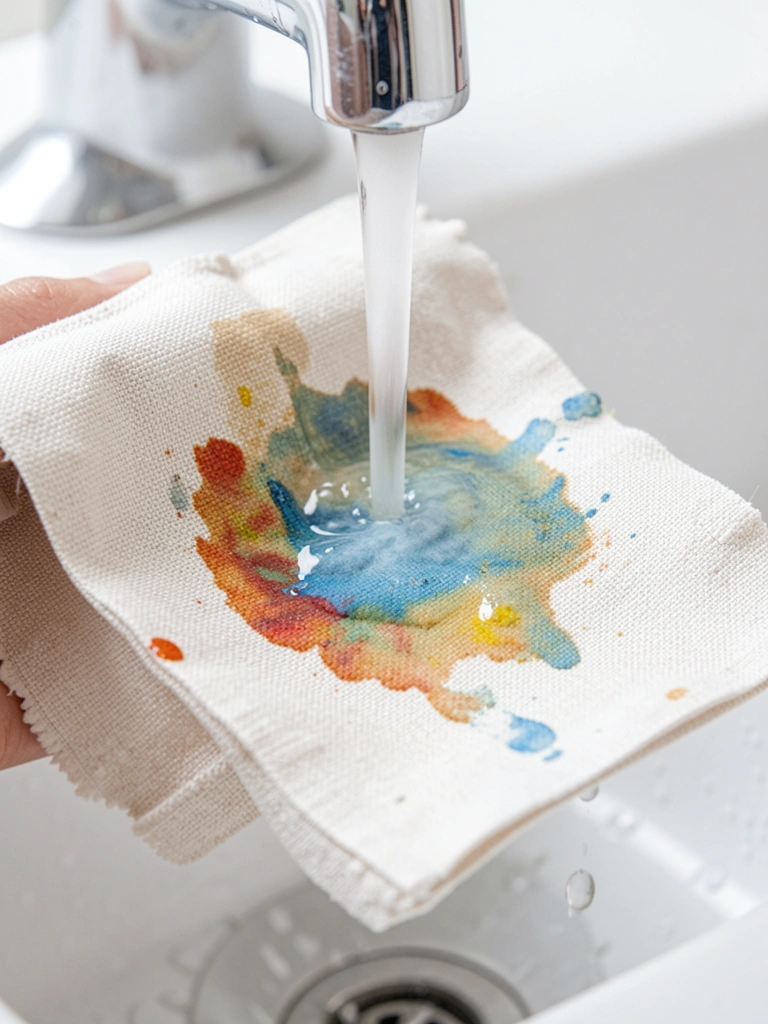
Hold the stained area under cold running water and flush from the back of the stain. This pushes pigment out of the fibers instead of through them.
When it's working, you’ll see color washing away and the paint thinning. My shirts often look very patchy at this point — that’s normal; it means paint is releasing. The main risk is using hot water, which can set some pigments. Tip: keep the water cold and steady, and change angles so water flushes out, not deeper in.
Step 4: Apply Soap and Gently Agitate
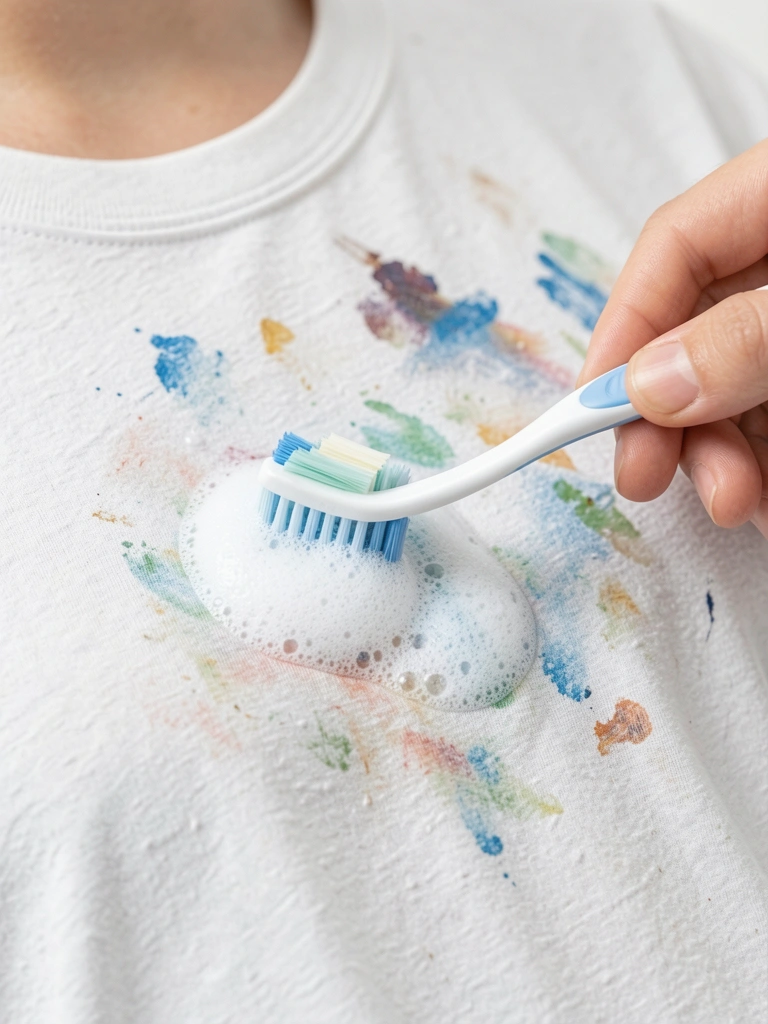
Put a few drops of liquid dish soap on the stain and work it in with your fingers or a soft brush. Let it sit for five to fifteen minutes, then scrub gently and rinse.
If it’s going well, the stain will lift into the suds and fade. My experience: the fabric often looks patchy and uneven after the first scrub — that's okay. The error to watch for is aggressive scrubbing that frays fibers or spreads pigment. Tip: brush softly in a circular motion, then blot and rinse; repeat rather than scrubbing harder.
Step 5: Use the Right Solvent for Oil-Based Paints, Carefully
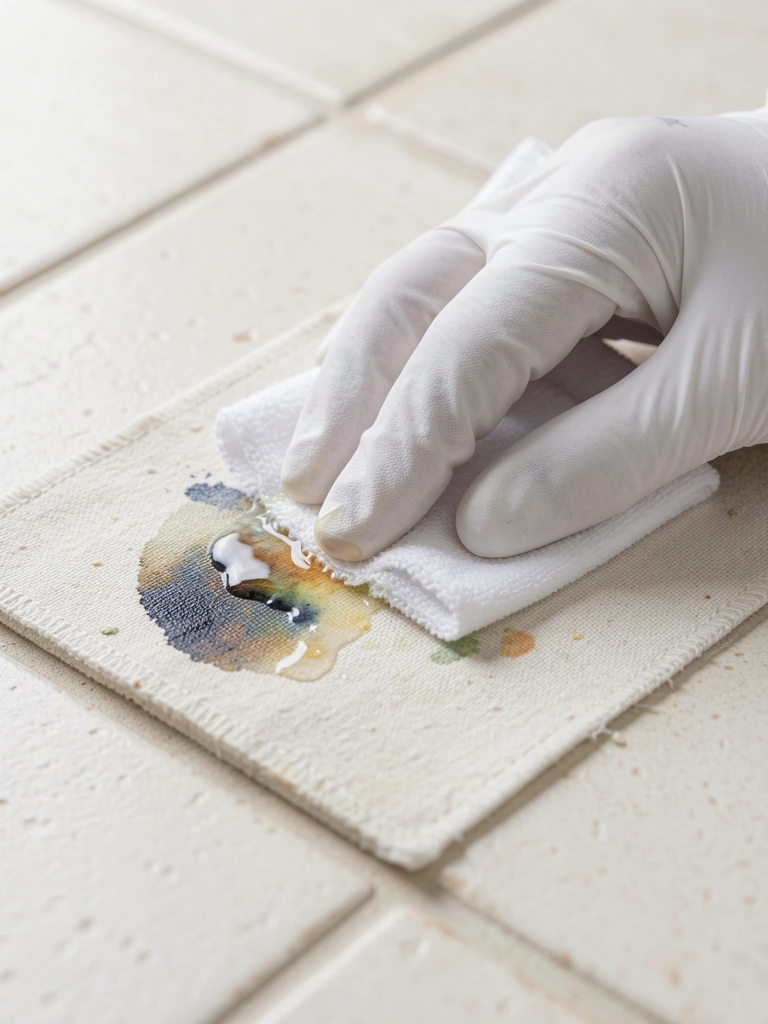
For oil-based paint, use a solvent like mineral spirits or acetone—but always test in a hidden seam first. Work in a ventilated area and wear gloves.
Apply solvent to a clean cloth and blot the stain, moving outward. If paint transfers to the cloth, keep blotting with fresh cloth pieces. I once used too much solvent and lightened the fabric dye; that’s why I test first. The biggest risk is pouring solvent directly on the garment or oversaturating it. Tip: control the amount by applying solvent to cloth first, and swap cloths often.
Step 6: Soak or Pretreat Then Launder According to Fabric Care
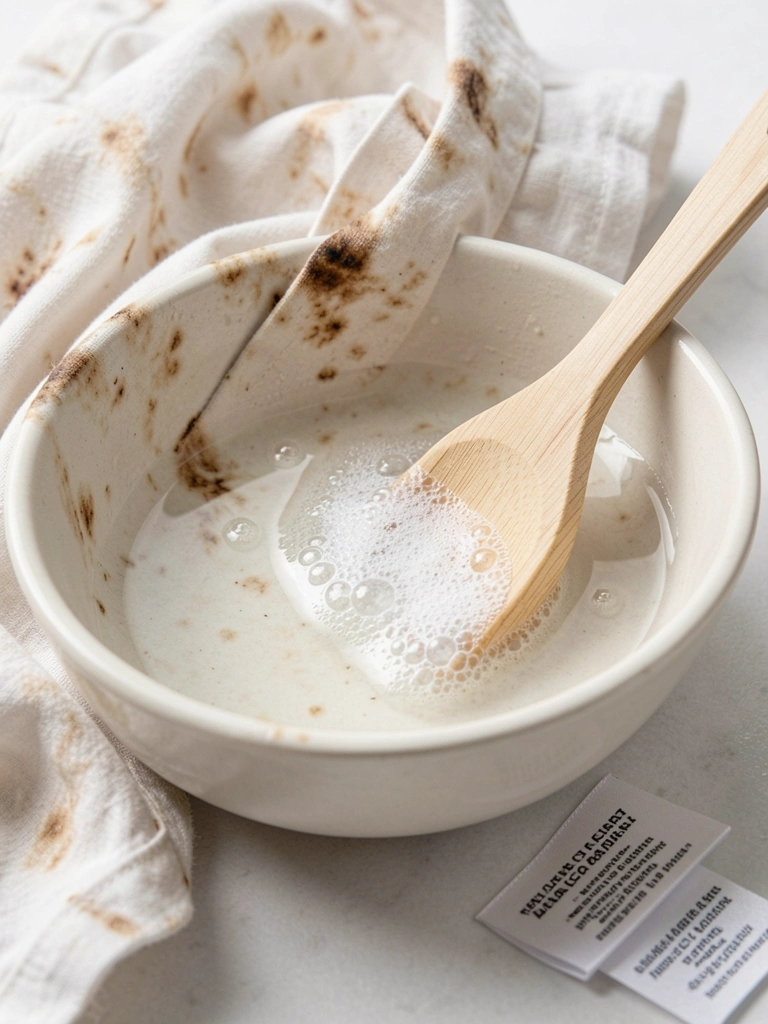
After pretreating, either soak the item in cold water with detergent for 30–60 minutes or run it through a normal wash per the care label. Check the stain before you dry.
When I launder properly, many stains vanish or become faint. The thing that ruins attempts is putting the item in the dryer with paint still visible; heat sets it. If the stain is still visible after washing, re-treat—don’t dry. Tip: air dry until you’re sure the stain is gone.
Step 7: Repeat, Use Oxygen Bleach, or Seek Professional Help
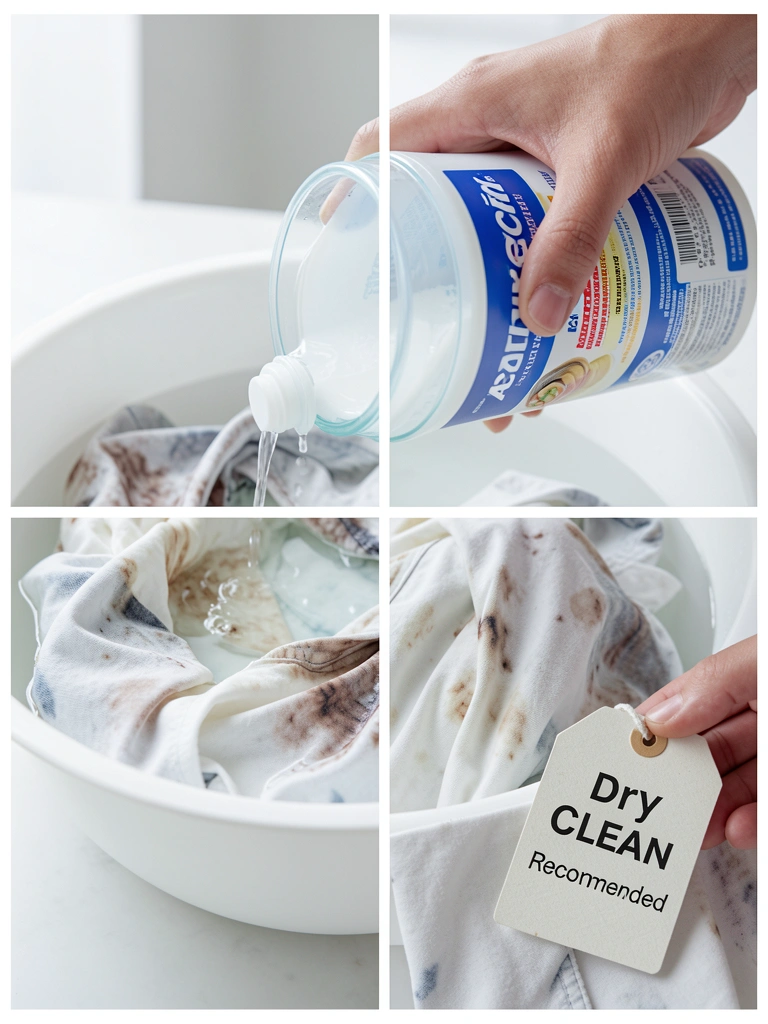
If some paint remains, repeat the appropriate steps or soak in an oxygen-based bleach solution if the fabric is colorfast. Mix as directed and soak for a few hours, then wash again.
I’ve had garments that needed two or three cycles before the stain faded. The risk is overdoing strong chemicals on delicate or non-colorfast fabrics. If the fabric label says dry clean only or the stain won’t budge after safe at-home attempts, take it to a professional cleaner. Tip: always test any stronger treatment inside a seam first.
Common Mistakes to Avoid
- Rubbing the stain aggressively — blot or scrape instead to avoid spreading; repeat gentle steps instead.
- Using hot water too early — heat can set pigments; stick to cold water until you’re sure the paint is gone.
- Pouring solvent directly onto fabric — it can oversaturate and stain; apply solvent to a cloth first and blot.
- Drying before the stain is gone — the dryer sets paint permanently; air dry until clean.
- Skipping a hidden test — always test solvents or oxygen bleach in a seam to check colorfastness.
Final Thoughts
I don’t expect your first attempt to remove every trace. Most of my wins came from repeating gentle steps, not from one miracle product.
Be methodical, test first, and be patient. You’ll save more fabric that way.
You can do this. Take it slow, and keep that favorite shirt in the rotation.